Who is in the "circle of care"?
 Lisa Feldstein
The "circle of care" is a confusing term as it is not in the law yet is used often.
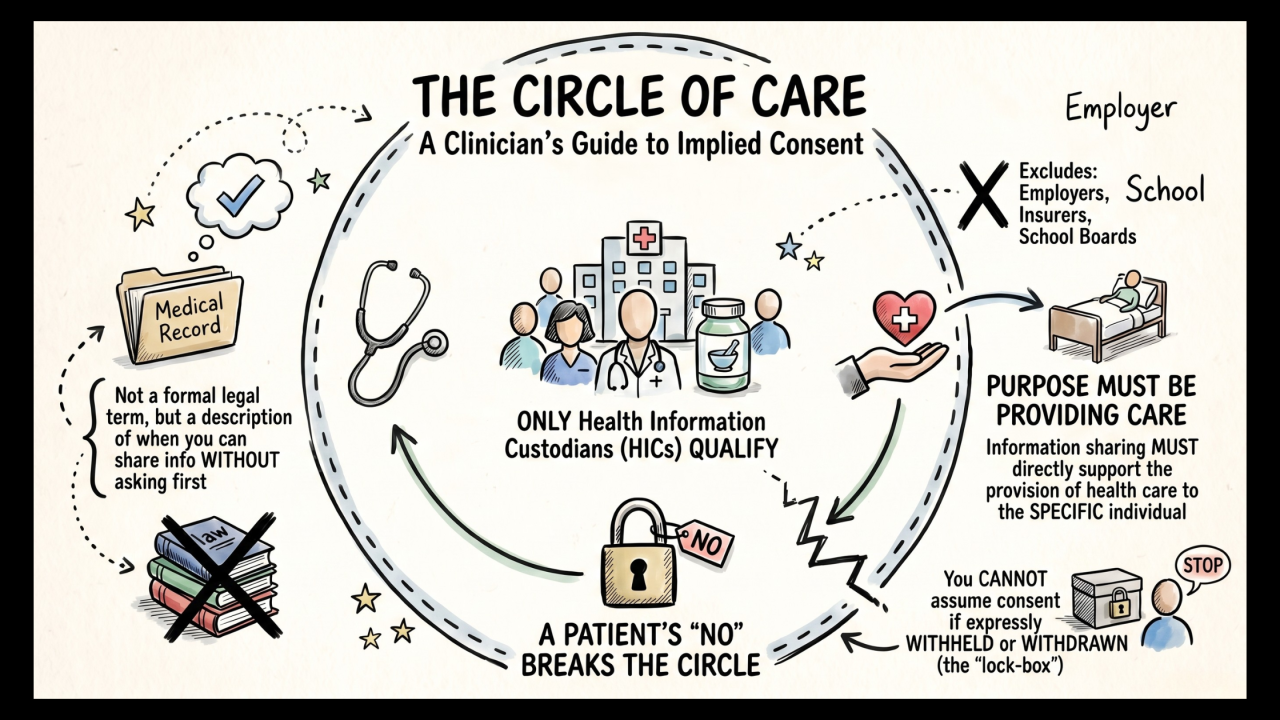
When a loved one is navigating the mental health system, family caregivers often hear the term "circle of care." While this is not a formal legal term defined in Ontario’s Personal Health Information Protection Act (PHIPA), it is a common phrase used to describe how health information is shared among providers. Understanding how this "circle" works can help caregivers better support their loved ones while respecting their privacy rights.
What is the Circle of Care? The circle of care refers to the ability of certain health information custodians (such as doctors, nurses, pharmacists, and psychiatric facilities) to assume a patient’s implied consent to share personal health information with one another. This sharing must be for the specific purpose of providing or assisting in the provision of health care to the individual. For instance, a family doctor can typically share a patient's history with a referred psychiatrist based on this assumed consent.
Who is Included? The circle primarily consists of the clinical team. This includes:
- Health care practitioners like doctors, nurses, and psychologists.
- Facilities such as hospitals and psychiatric units.
- Service providers like pharmacies and laboratories.
Caregivers should note that some parties are not automatically in this circle, such as employers, insurers, or government ministries.
The Caregiver’s Role in the Flow of Information
A common misconception is that clinicians are strictly prohibited from speaking to a patient's family. In reality, the law allows for a flow of information in several ways:
- Collateral Information: When a physician is assessing a patient for a potential involuntary admission (such as a Form 1), they are legally permitted to collect "collateral information" from family and friends to form their clinical opinion.
- Substitute Decision-Makers (SDMs): If a loved one is found incapable of making a treatment decision, their SDM is legally entitled to receive all necessary health information to provide informed consent.
- Assisting in Care: If a patient is incapacitated or unable to give consent personally, a provider may disclose information to a relative or friend for the purpose of contacting a potential SDM.
When the Circle "Breaks"
The circle of care is not an absolute right to share. A patient (or their SDM) has the right to withhold or withdraw consent for specific providers to see their records, often referred to as a "lockbox". Furthermore, providers cannot rely on implied consent if the information is being used for non-clinical purposes, such as research or fundraising.
Safety and Emergency Exceptions
Even if a patient expressly forbids sharing information, the law provides a "safety valve." Health information custodians may disclose information without consent if they believe on reasonable grounds that it is necessary to eliminate or reduce a significant risk of serious bodily harm to the patient or others. This is often relevant in crisis situations involving suicidal ideation or potential violence. By understanding these boundaries, caregivers can more effectively communicate with a loved one's treatment team and ensure that essential information is shared when it matters most.
Categories: : Privacy